This article was originally written in Turkish in December 2025 as a contribution to the “2026 Trends in the Software World” series. The original collection can be found here: Yazılım Dünyasında 2026 Trendleri.
Hello, this is my third article. For four years now, I’ve been talking about mass layoffs, recessions, emerging business sectors, and working frameworks like the hybrid model. As someone who has been coding in Python for over 15 years and working without interruption, 2025 turned out to be the year where I had to learn the most new things, gain the freshest experiences, and constantly reinvent myself compared to any previous year. Moving forward, I foresee that “captain” developers—those who can adapt swiftly to dynamic conditions, work cross-functionally, remain highly productive, and manage tiny, agile teams—will become incredibly valuable.
Back in 2023, I wrote that NO-CODE would become a trend once again. What I had in mind was a development environment built around visual programming tools—similar to Unreal Engine Blueprint—where people with absolutely no programming background could build software. N8N is a wonderful example of this. But what I failed to anticipate was that despite the long-standing antipathy toward the terminal even among seasoned software engineers, the terminal itself would be embraced so universally as a prompt interface. This shift has radically impacted the interface components of editors and IDEs alike. Are we truly ready for editors that will soon eliminate the file explorer and code viewer entirely, leaving nothing but a single prompt input block? Editors that show changes in the code rather than the code itself, or better yet, don’t even show that but instead explain what modifications were made using natural human language?
These shifts are causing anxiety for some of us. Yet, similar metamorphic processes have happened in the past. From the old-school concept of a “Webmaster” splitting into Front-End / Back-End / Full-Stack, to Cloud Engineers evolving into Platform Engineers, roles have always transformed. ActionScript or SymbianOS developers felt these exact same shifts in their time. At the end of the day, we have one singular purpose: to deliver value. To generate the most sustainable value through the most optimal path with the fewest resources. This was true yesterday, and it will remain true tomorrow. Only the tools and methods change.
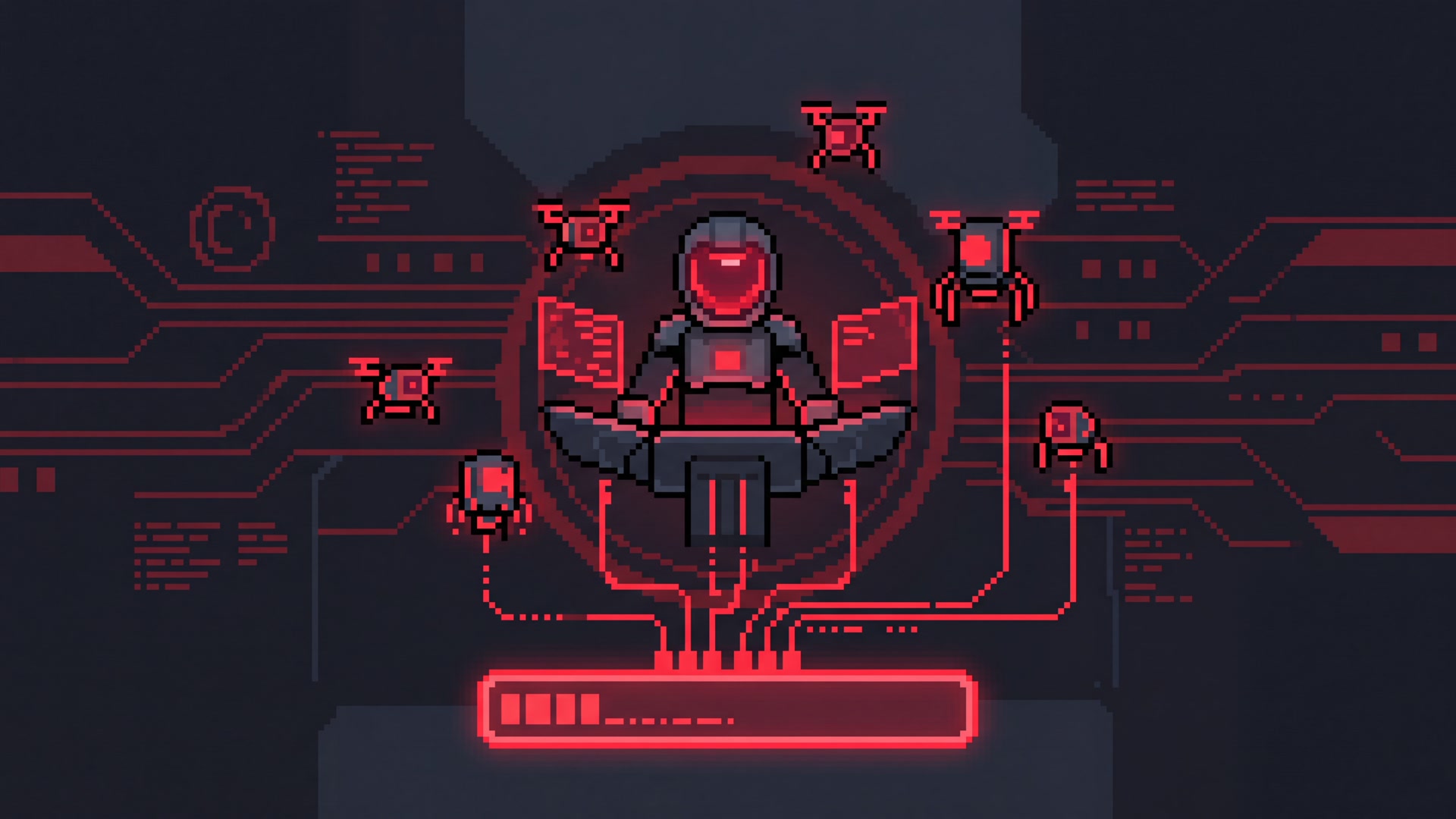
Simply being developers with old-school analytical intelligence is no longer enough. We now need to be developers who command human language. We need to be engineers who excel at writing, speaking, and communicating—highly social, connected, and deeply open to the outside world. From now on, every single one of us must become a generative developer: someone who takes the initiative, manages projects, and captains a crew of AI agents. Rather than writing code manually, our primary job will shift to making machines write code, reviewing that code, optimizing it, boosting its efficiency, correcting its flaws, and preventing those flaws from recurring. In fact, doing quite the opposite—deleting code and ruthlessly cleaning up codebases—will become our main focus.
Newcomers entering the industry can count themselves lucky instead of falling into despair, as they will naturally adapt to this new definition of a developer much faster. They might want to take a close look at emerging fields like Data Engineering, Platform Engineering, AI Governance, Generative AI, and MLOps. If code optimization is what excites them, they can dive deep into Interoperability and CUDA; being a polyglot engineer is a brilliant advantage right now. On the other side of the equation, companies desperately need to solve their own adaptation issues. Currently, instead of opening new roles, they are trying to force an internal transformation. The catch is, they don’t even know what positions to open or what the actual requirements for those roles are. I don’t know if things will completely settle down in 2026, but it is certainly going to take some time. Of course, I am keeping macroeconomic and geopolitical developments entirely out of this equation.
I wish everyone a happy, peaceful year ahead—one where technological opportunities are accessible to all developers in a truly fair and equitable way.